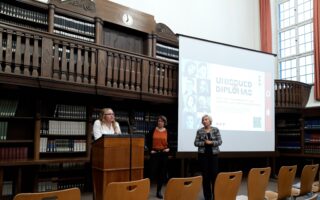
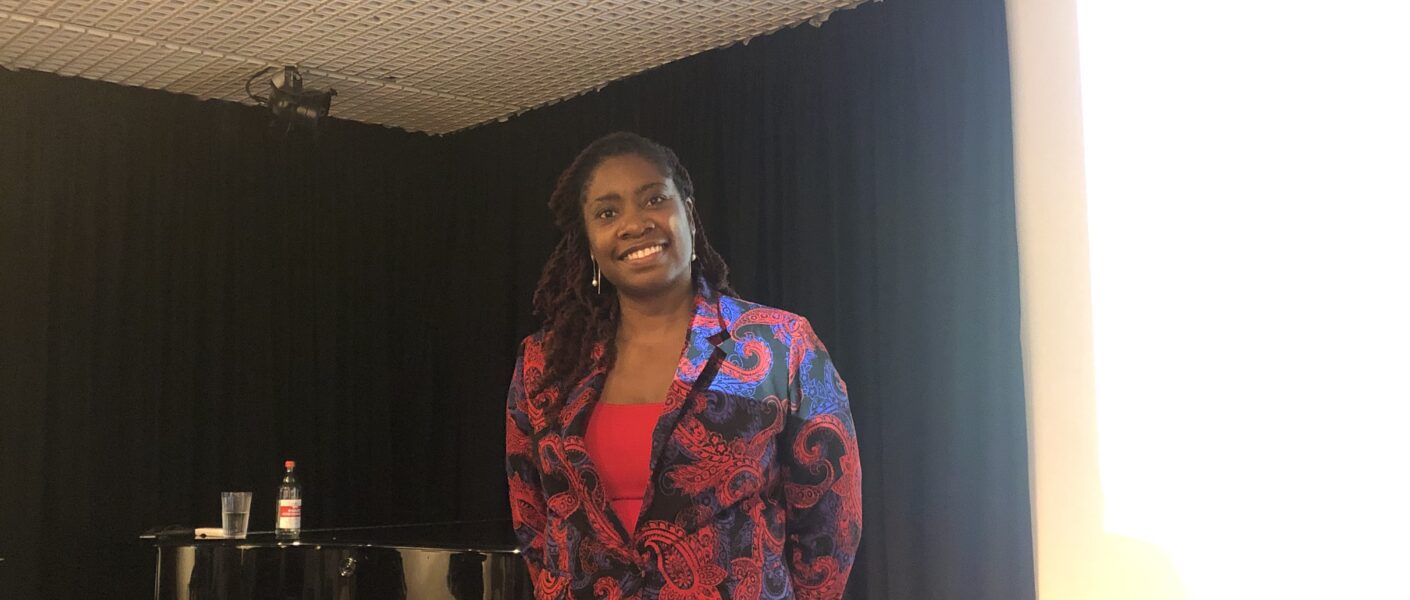
Esther Earbin Sandlin gave a glimpse into some aspects that shape the lived reality of Black Americans today. She did not only propose an answer to the question of what unites Black Americans, but also suggested an answer to the question of how the American society as a whole can unite.
This month, as part of its What Unites U.S.? series, the DAI invited Esther Earbin Sandlin, an U.S.-based lawyer, to talk about the meaning of being black in the U.S. today. Presently, Sandlin serves as Associate General Counsel and Corporate Secretary for the Federal Home Loan Bank of Indianapolis. Furthermore, she currently holds an adjunct professorship teaching Space Law at the Indiana University Robert H. McKinney School of Law.
In the DAI hall she talked about the history of slavery and segregation and how it shaped the United States, hip-hop, and the invention of Afrofuturism. From beginning to end, Sandlin captivated her audience. Not only did she give interesting insights into the many different aspects that shape black life in the U.S.; she also opened up the space of not-knowing it yet and invited her listeners to lean into curiosity.
History and Identity
Sandlin explained how a history of slavery and racial segregation has shaped not only the U.S. but also the personal identity of some Black Americans. In the U.S. people oftentimes do not identify as U.S. citizens but as U.S. citizens of Italian descent for instance. For Black citizens whose lineage goes back to enslaved people this can remain unclear.
In detailing her own family history, she brought awareness to the fact that racial segregation happened until well into the 1960s. Her own parents would not have been allowed to get married in the U.S., as so-called „mixed marriages“ were illegal. Today, there are still many people who lived through racial terror in form of lynchings or who fought for equality in the Civil Rights Movement.
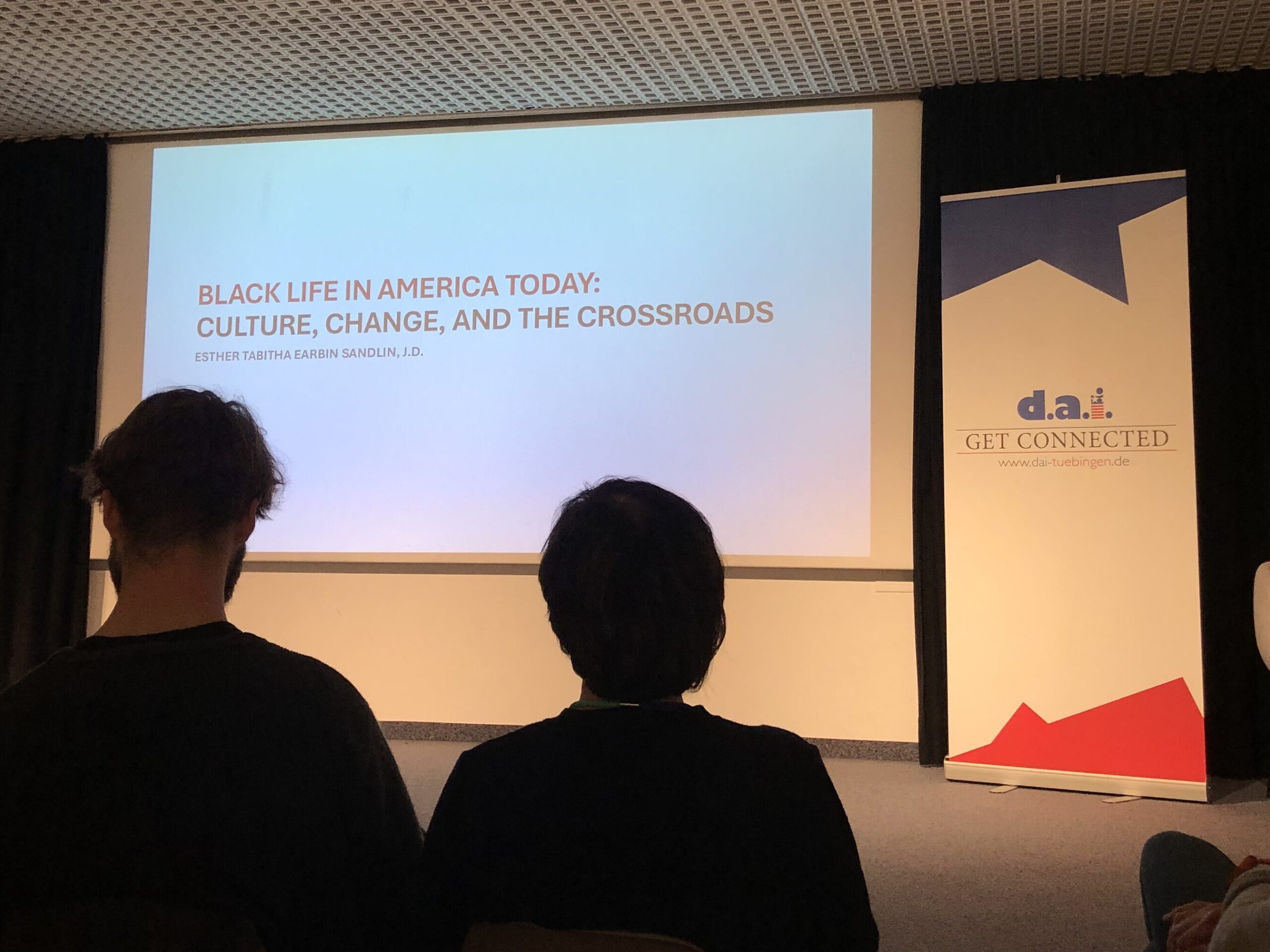
She also included statistics in her talk showing that African Americans remain less likely than White or Asian Americans to hold a high school or college education. In addition, Black Americans still earn less in their jobs at comparable levels of education. Because college education is extremely expensive in the U.S., this feeds back into the education gap, exacerbating the wage disparities. Sandlin argued that there is a specific Black experience of the United States because the country has and continues to treat Black Americans differently.
Identity and Interaction
Sandlin then went on to describe how the ways Afro-Americans decided to deal with their reality transformed culture not only in the U.S. but far beyond. From the creation of powerful art to the invention of hip-hop and Afrofuturism, black artists kept pushing forward. In doing so, they themselves shaped the world around them.
She made clear that being Black is not only about battling with systemic injustice but also about reacting to it. Systemic injustice gives rise to many forms of interaction. Artists reflect on the obstacles they face or they express their feelings and opinions. They might also be more political and seek to bring attention to their situation. Or they look into the future and focus on the change that should be brought into action.
[Oprah] was so sick of seing people in magazines that didn’t look like her. She created her own magazine. And put herself on every cover.
Esther Earbin Sandlin
She emphasized that although being Black has a significant impact on U.S. Americans, the lived realities of different Black Americans might still vary widely. Differences in experience might stem from living in different states. They might also originate in being born into a family with high or low income or into a specific neighborhood.
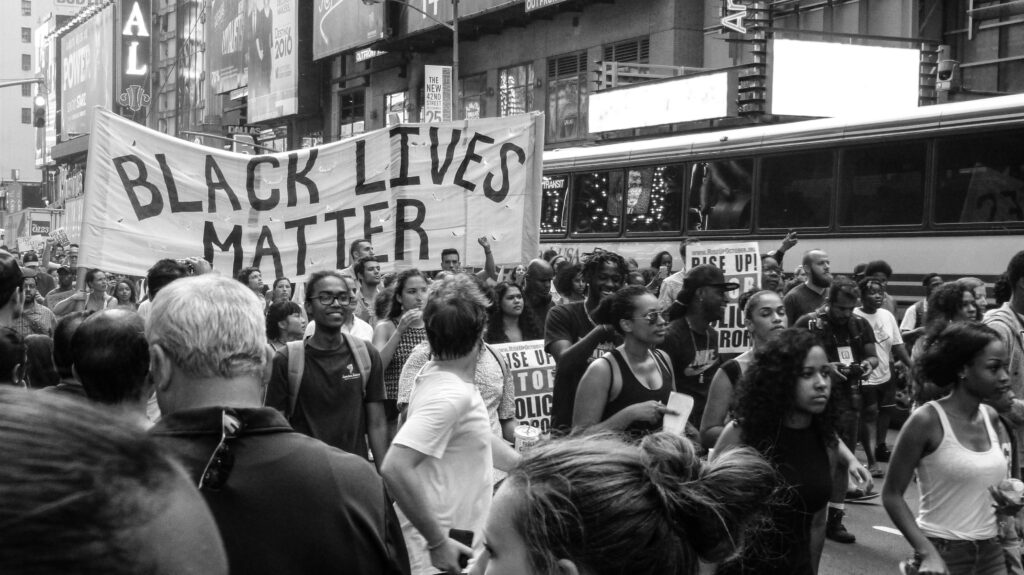
Sandlin also pointed out that Black Americans might land anywhere on the political spectrum. Despite Trump pro-actively increasing systemic injustice against Black people, some Black Americans still support him. She seemed to suggest that any assertion about the world is always an assertion about oneself as well. Saying that a system is oppressive and needs change might be understood as the oppressed party being too weak.
An Inspiring Mindset
From time to time, Sandlin paused and asked a question. Sometimes someone in the audience could answer it, but most of the time it was met with silence. This she would welcome with: „Great! Then I get to tell you that!“ and continue to educate with patience.
Sandlin kept inviting the audience to engage with the data and the ideas presented during the talk and beyond. Furthermore, she stressed the importance of being receptive to new information and seeking out opportunities to learn. Her message: „Advancing equality is a collective responsibility“. She encouraged her listeners to stay curious and to start conversations with people. According to her, to be united we must seek connection, and to move forward, we must create momentum collectively.
Featured Image: Madeleine Kuhlberg