Tübingen is known for its diverse community and vibrant atmosphere, but has it always been this way? Kelly, who was an exchange student from America in 1997, answered this question with a definite “yes”. Moreover, her enthusiasm proved how Tübingen forever lasts in the hearts of exchange students.
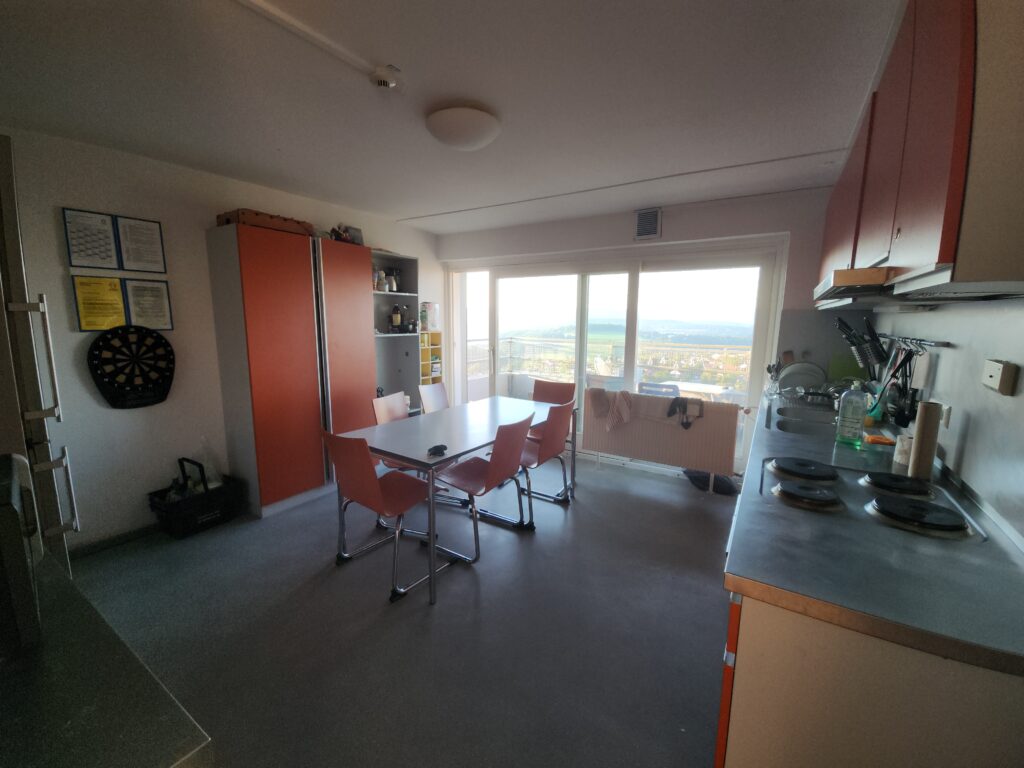
On August 23rd, a special encounter took place in a flat in Fichtenweg. At the time, I was one of the last two students left in the flat, finishing a six-month exchange semester in Tübingen. As I was packing and cleaning the room, the doorbell rang.
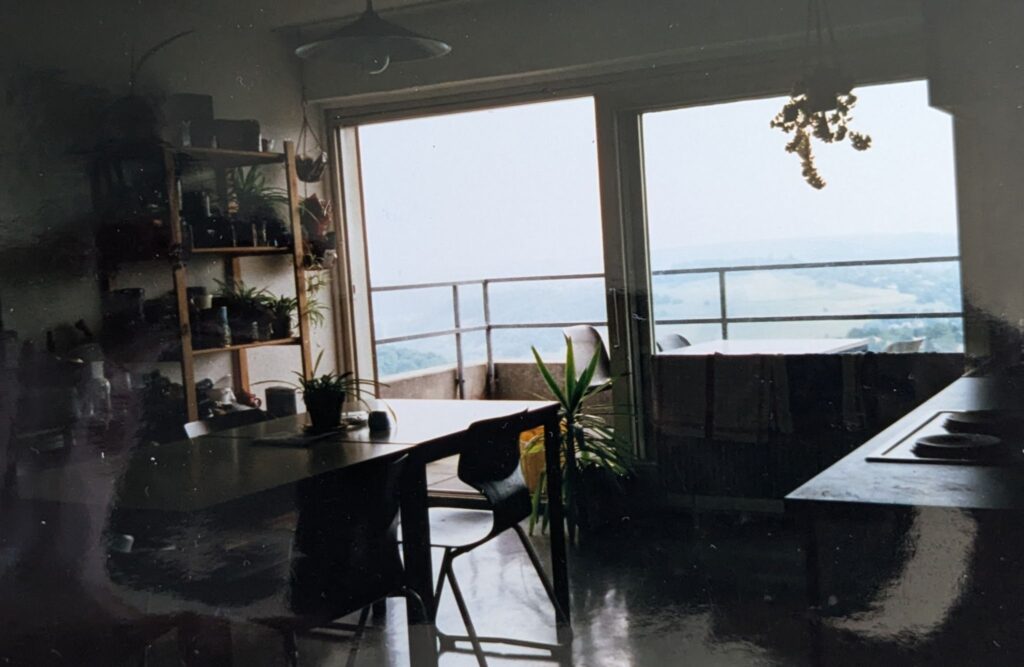
Two unfamiliar faces stood at the door: a tall German man and an American woman, beaming with wide smiles. The woman introduced herself as Kelly and explained: “I was an exchange student in Tübingen back in 1997, and I used to live in this flat. Would you mind if we come in?”
A meeting between two exchange students, 27 years apart. Astonished by the uniqueness of the moment, we began travelling back in time, hearing her stories.
Arrival in Tübingen
Kelly explained that her exchange semester in Tübingen was part of the Summer Intensive Program designed by Northern Arizona University and the University of Oregon. “As a 19 year old, still in my freshman year of college, I was fairly nervous to be out of the U.S. for the first time”, she recalled.
Her friend Tonio, a former German exchange student at her high school, helped her to adjust when she first arrived. “He met me at the airport, showed me around Stuttgart, and helped me get to the hostel in Tübingen, since dorms weren’t open yet.” 27 years later, he was guiding her once again, standing in the same room with us.
Kelly also remembered meeting with the student tutors, who provided information about living and having fun in Tübingen. The tutor’s system still exists today, with the International Connecting Week held at the start of every semester.
Another thing that stood out to her upon arrival was the city’s diversity. “On my floor in Fichtenweg, we had only one German student. The other students that I recall were from Italy and Egypt. I was the only American.” Even in 2025, a quarter of a century later, Tübingen continues to maintain its highly international status with over 4,000 degree-seeking as well as exchange students from around the world.
Exchange program in Tübingen
When it came to academics, Kelly mentioned that she attended a set of lectures and tutorials in German studies each day. “The lectures were all in person nothing was online at all. All of them were held in the same classrooms near the Mensa, but sometimes our tutorials would be held outside if the weather was nice.” She also happily participated in a cooking class that was offered alongside the academic program.
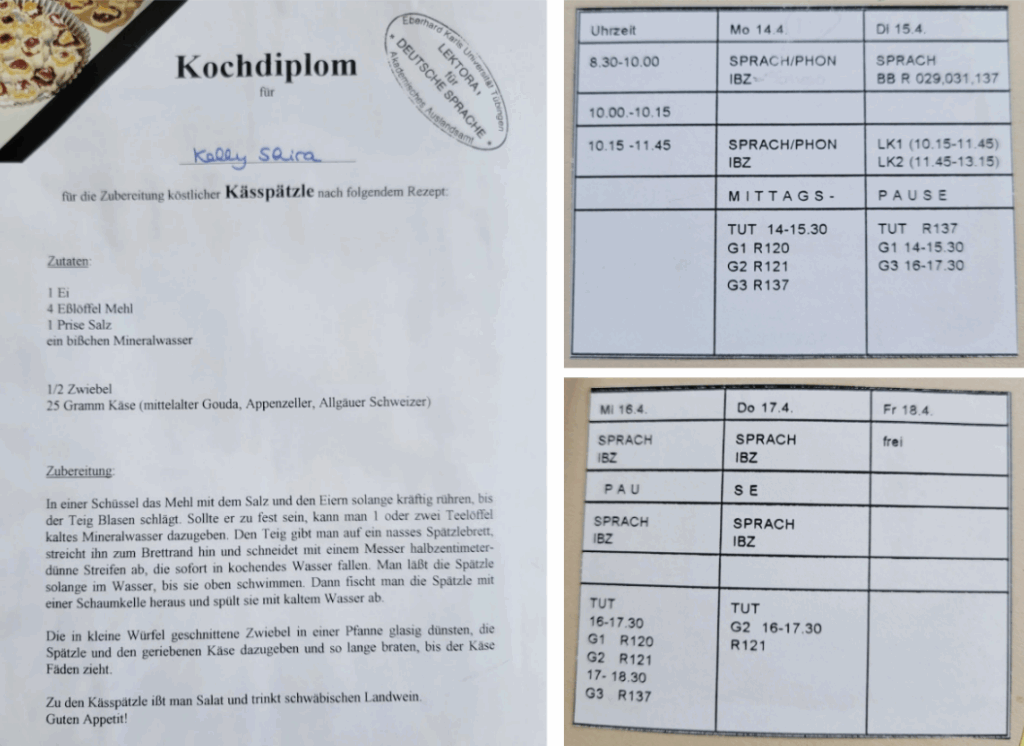
Similar to the courses Kelly took in Germanistics, the University of Tübingen currently offers German language courses for Erasmus and exchange students. These courses are available both in person and online, and are divided into levels based on students’ prior knowledge.
Other than the lectures, short trips were also included in the program. “The teachers took us on trips to Ulm, Blaubeuren and Bodensee. But I do not remember any other official university activities where we engaged with other international students”, she recalled.
Similarly, I also went on short trips organized by StudIT, to places like Ludwigsburg, Konstanz and more. Something new the university now offers is the International Day event, where students run booths representing their home countries to share culture and information about studying abroad.
Leisure activities in Tübingen
When I asked Kelly about her favorite way to spend free time as an exchange student, she answered without hesitation: “Definitely Kuckuck!”
She loved hanging out at Kuckuck and met many new students there. “One was a member of a fraternity house and invited us to a big party there, that was really fun”, she said. After 27 years, Kuckuck still remains a beloved part of student life in Tübingen.
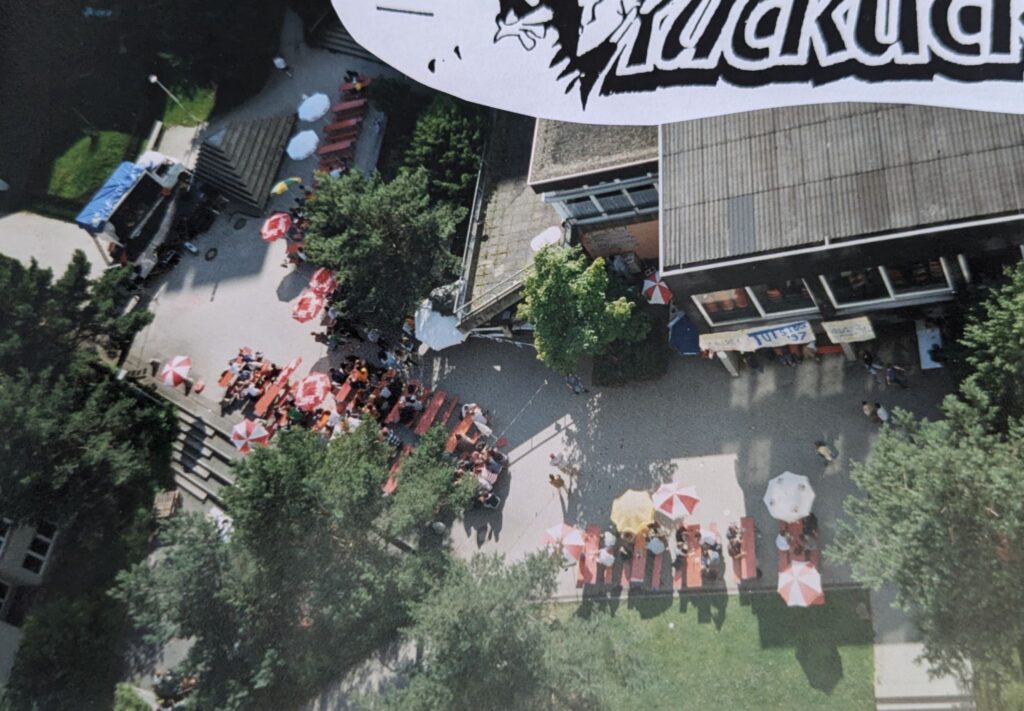
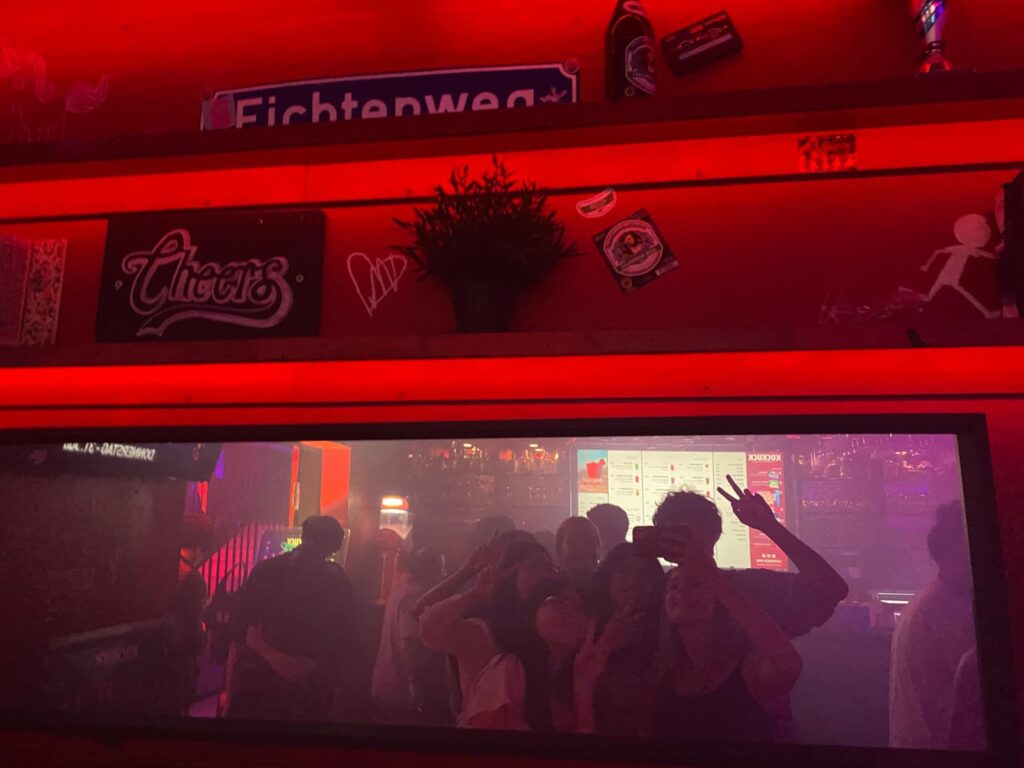
Kelly also shared some of the summer activities she enjoyed, such as visiting Flohmärkte and swimming at the Freibad. “We hosted grillfests in the forest near WHO as well, with lots of music, beer, and good food”, she added. Back then, she also spent time in the computer lab near the Mensa since the email was new in 1997.
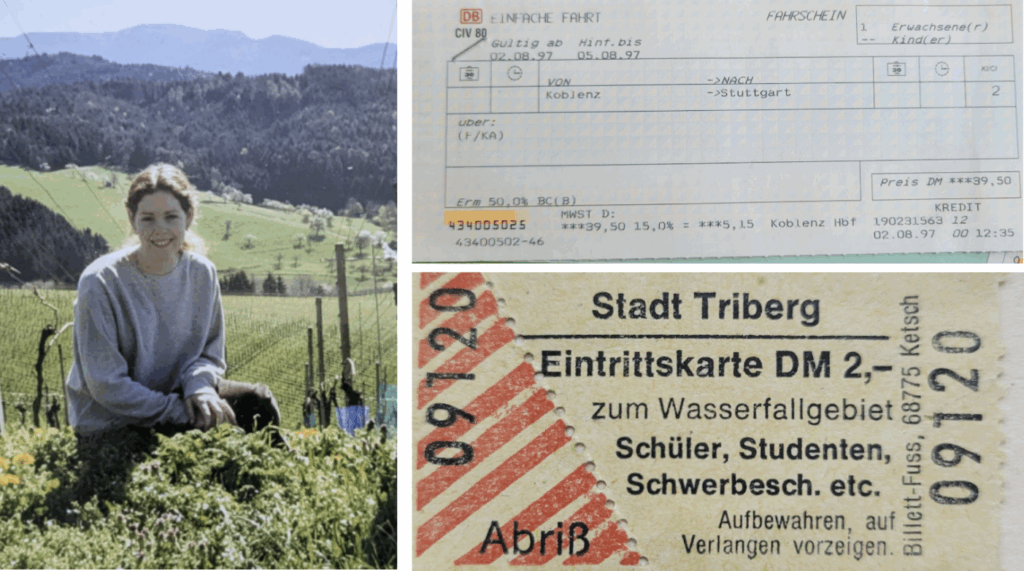
Kelly often used weekends to travel. At the time, the Deutsche Bahn offered the Schönes-Wochenende-Ticket for 15 DM (approximately 30 EUR), which allowed unlimited travel in the whole of Germany on regional trains throughout the weekend. “My friends and I took full advantage of the ticket, traveling to many places and events like Munich, Heidelberg, the Frühlingsfest in Stuttgart or camping in Triberg near the waterfalls.”
While the Schönes-Wochenende-Ticket was abolished in 2019, many current exchange students now use the Deutschlandticket, which offers similar access for the duration of a month.
After the end of the semester, Kelly also explored places farther outside of Tübingen. “My sister and I visited Paris, Amsterdam, Prague, Rome, Venice, Naples and Pompeii, along with a few more German cities,” she said.
Struggles as an exchange student
According to Kelly, adapting to exchange life came with various challenges. “The language barrier was initially a big struggle”, she explained. Then she added: “Getting used to living in a different country was difficult as well. We could only communicate with family and friends in the U.S. via letters, as international phone calls were very expensive.”
The language barrier is often one of the biggest problems exchange students face, especially for those arriving without prior knowledge of the local language. I experienced this myself, but the constant practice with classmates and German friends gradually helped building more confidence.
To ease the adjustment process, Kelly also suggested: “Since it is so much easier now to get information about different places, I would recommend doing as much research about the university and the city as possible.”
What has changed?
Upon returning to Tübingen, one of the first things Kelly noticed was how much of the city had changed. “I was surprised to see that the Hauptbahnhof and the area around it had been remodeled. The main university library also looks a lot different to me.”
Tübingen Hauptbahnhof has undergone continuous renovations since the 2000s to improve barrier-free facilities and passenger comfort. The Ammerbau extension to the main university library was added in 2003.
This time, Kelly also had a chance to visit the university’s botanic garden, a place she missed upon returning from her exchange semester. “It is a jewel right in the middle of the city,” she said.
What has stayed the same?
However, one thing in Tübingen hadn’t changed in her memory – the Altstadt. The place was meaningful to her, as she said, “We often went to the bars in the Altstadt and danced. My friends and I also loved to get coffee at Tangente Jour, which I was happy to see is still there! I love that it has not changed at all.”
It is this timeless nature that makes Tübingen even more charming, holding people’s special memories just as they left them.
Kelly’s Current Life
After the exchange semester in Tübingen, Kelly finished her degree in German language at Northern Arizona University in 2000. Then, in 2003, she obtained a Juris Doctor from Arizona State University College of Law.
Now, she is a lawyer living in Los Angeles, having worked at various law firms, even as a corporate attorney at Google.
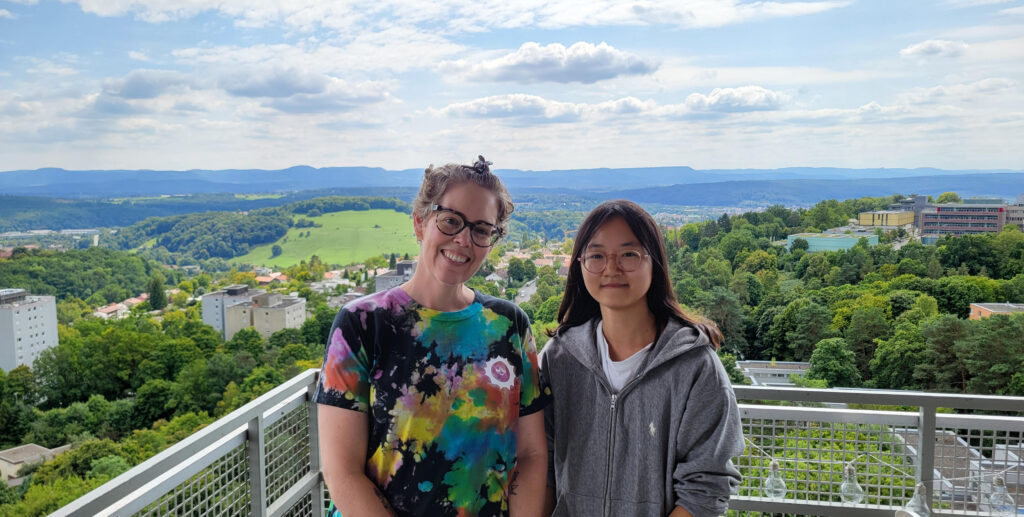
A piece of advice from Kelly
To future students coming to Tübingen, Kelly offered a piece of advice: “Immerse yourself in the language and culture as much as possible,” she said, to truly experience the exchange semester. “Speak German to everyone, even if you feel shy or reluctant at first.”
Travelling back to 1997 with Kelly reminded me why Tübingen holds such a special place in the hearts of many exchange students. No matter when they arrive and how long they stay, people form a deep bond with the city that lasts a lifetime.
I look forward to returning to Tübingen one day, just as Kelly did, hoping that someone in WHO will open the door and invite me in for a little time travel.
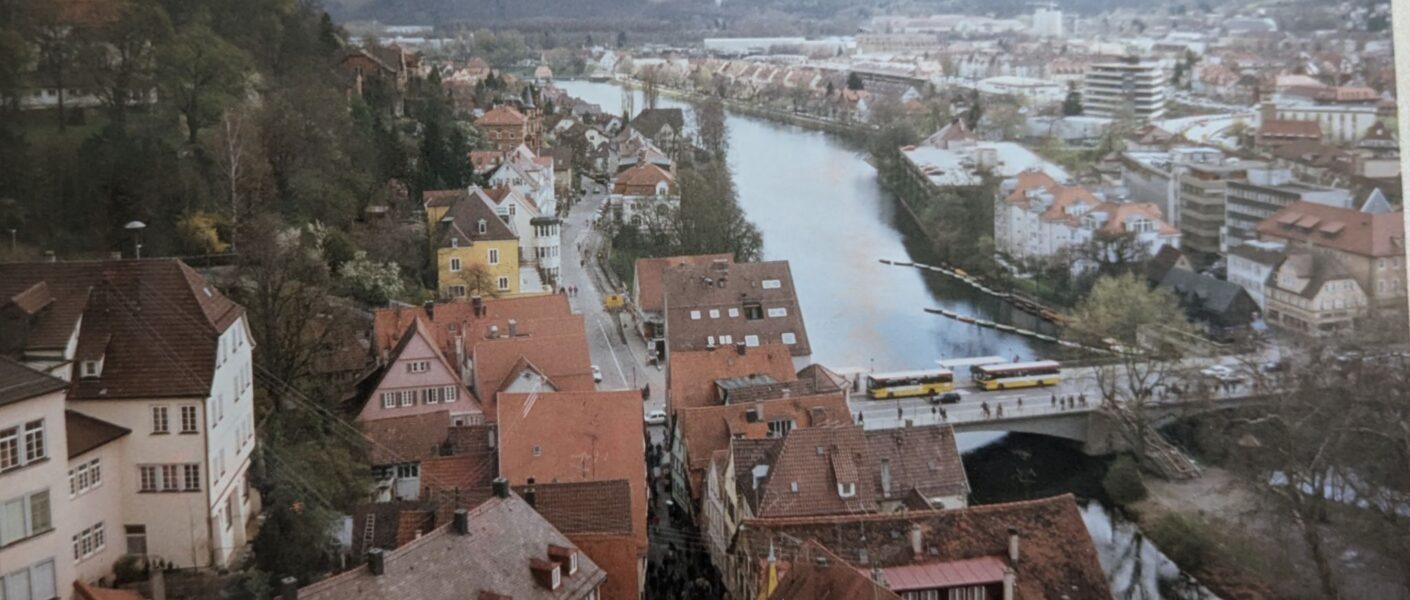
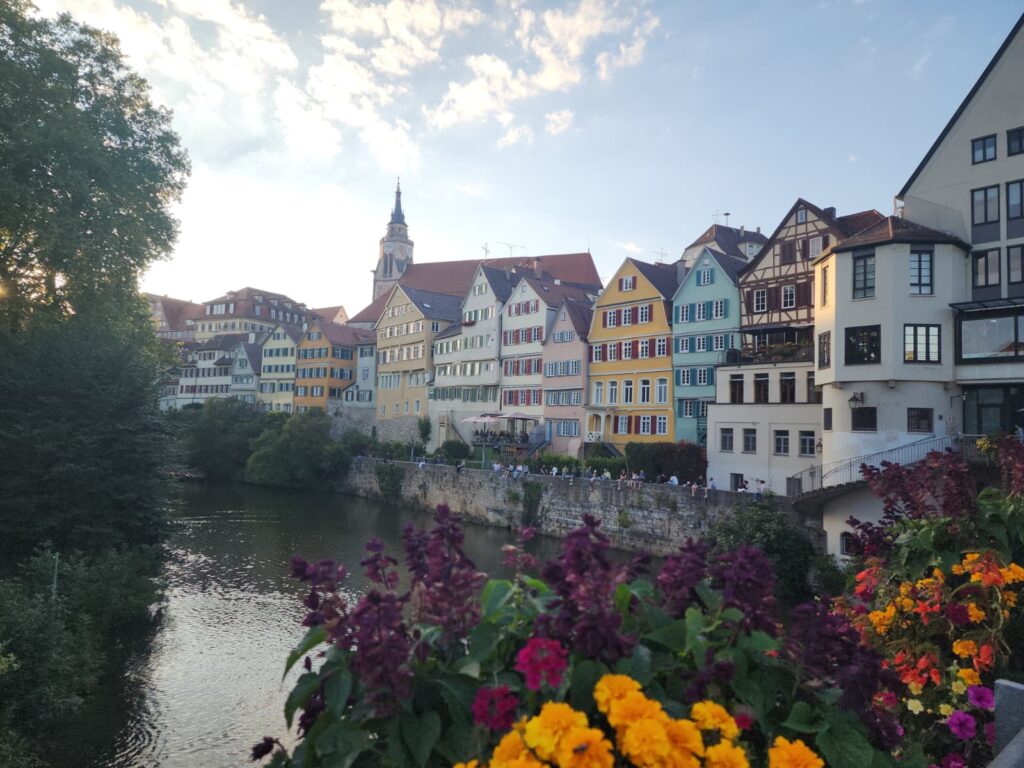
Title picture: Kelly Shira. View of the Neckar and Tübingen from the top of the Stiftskirche in March 1997